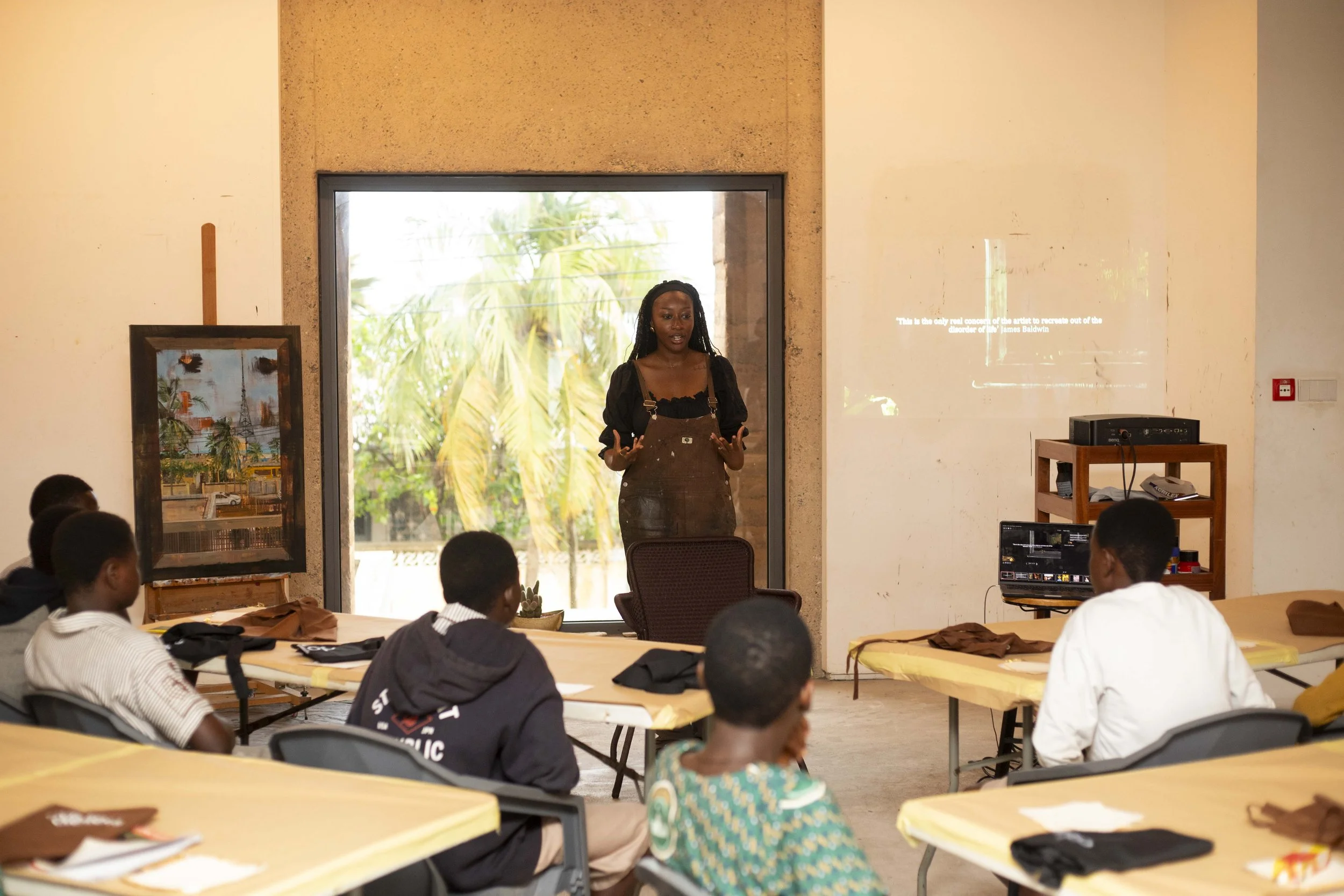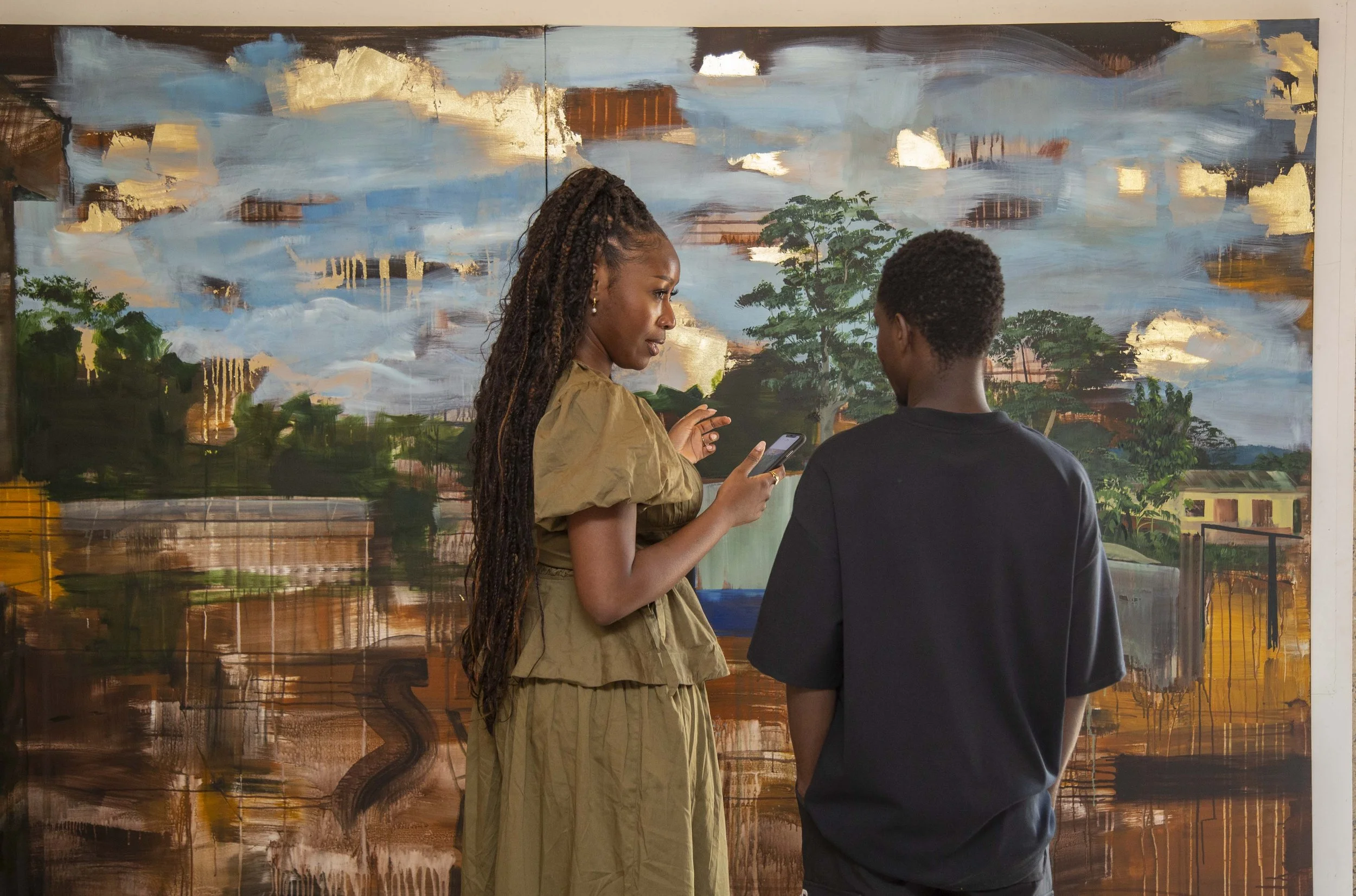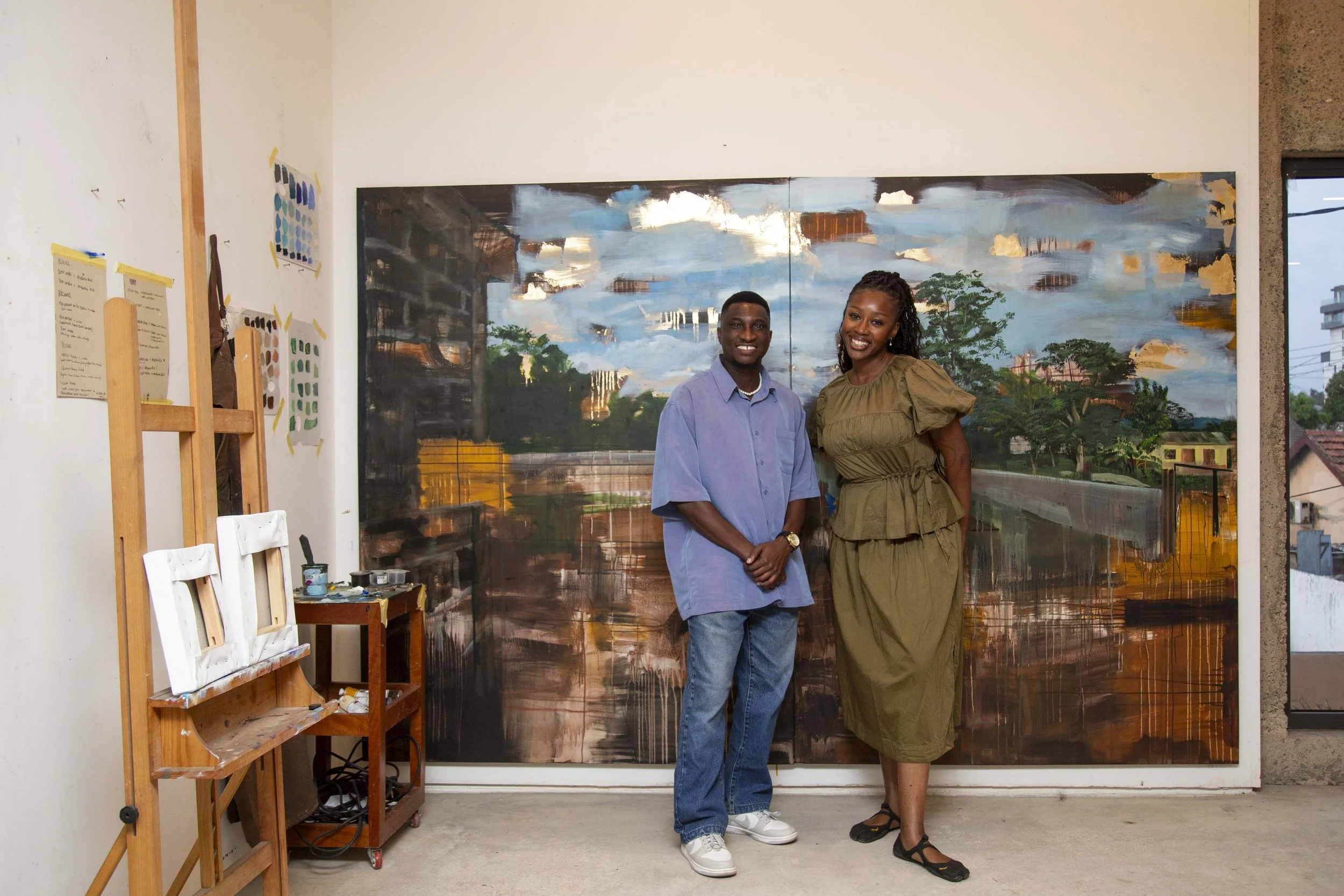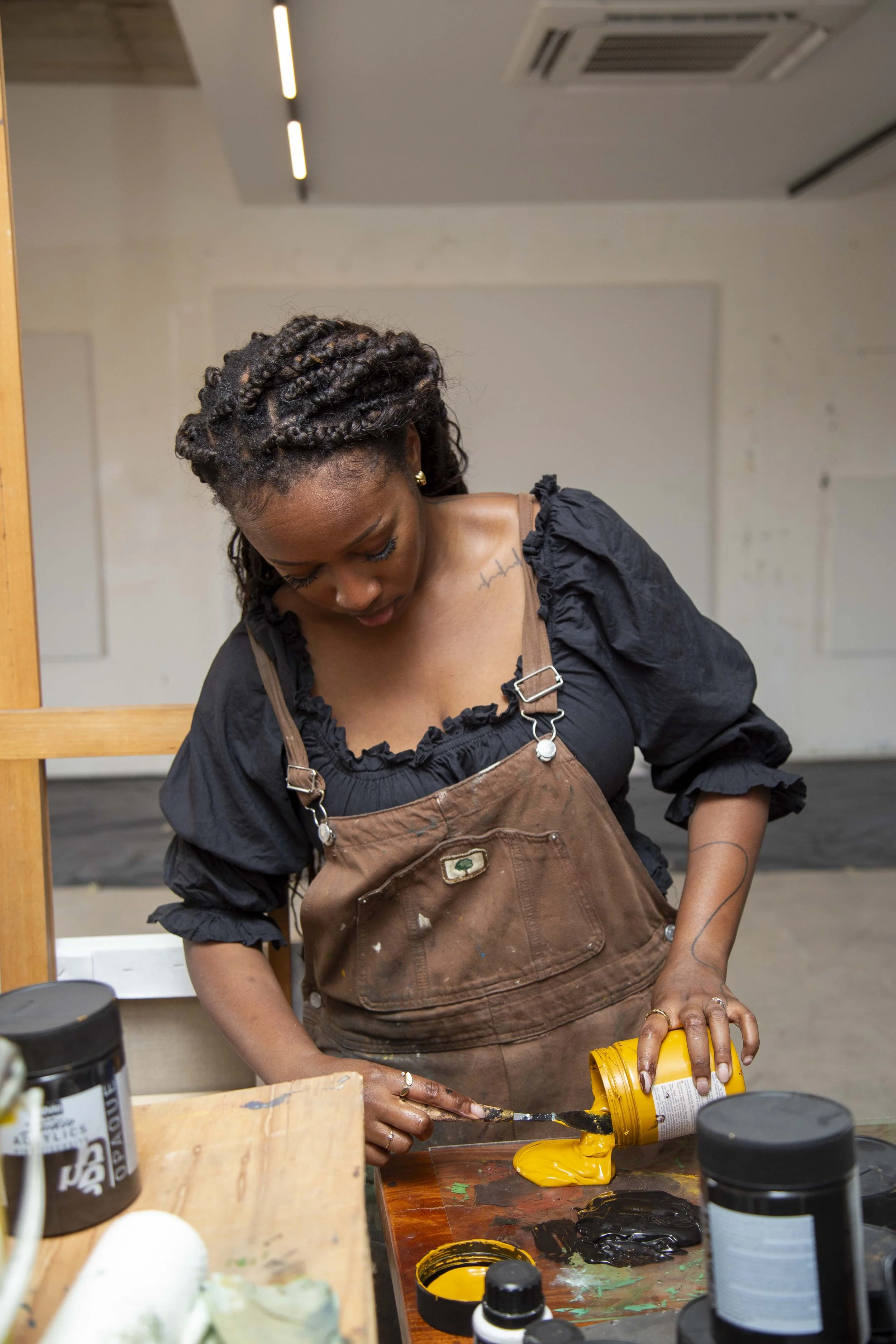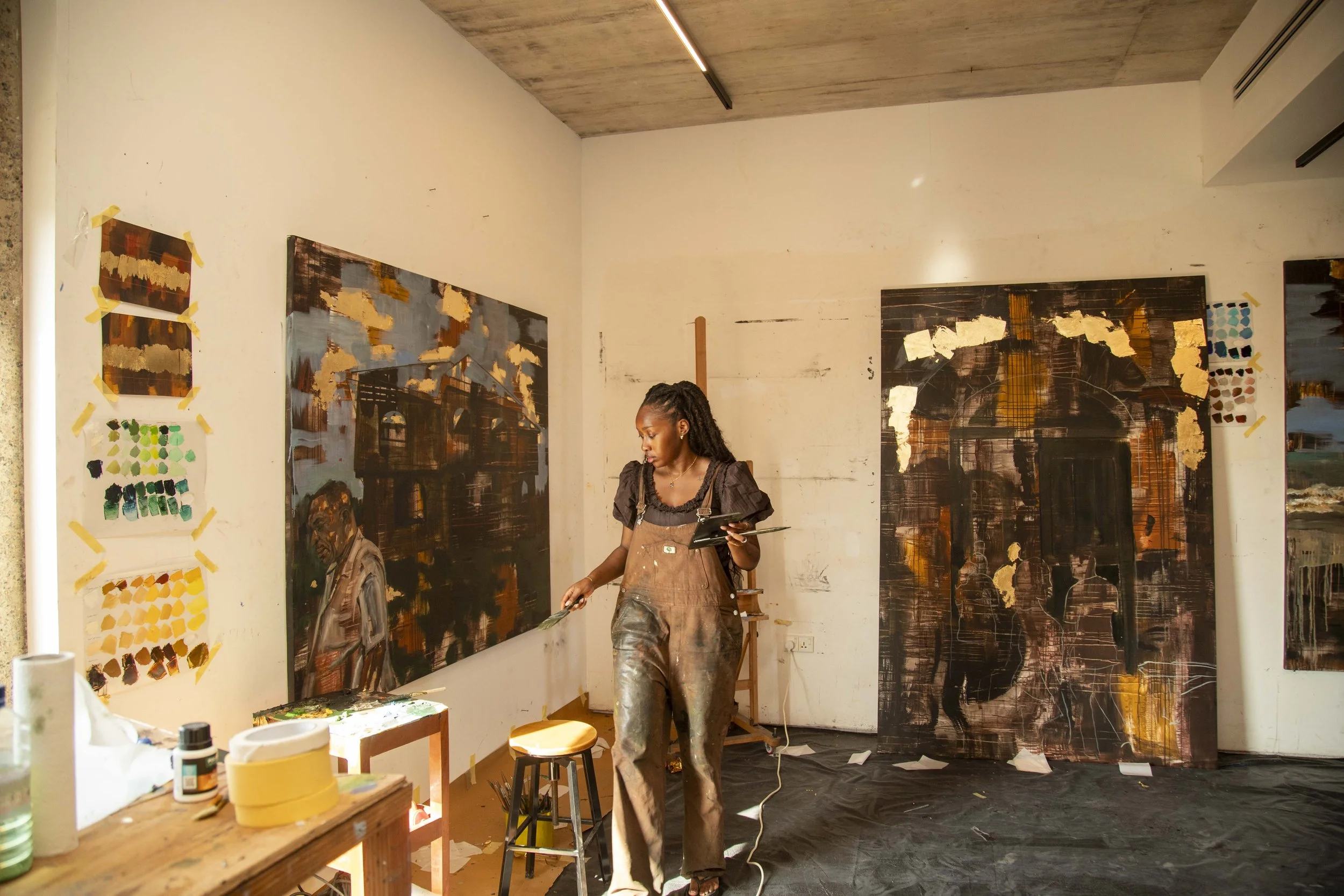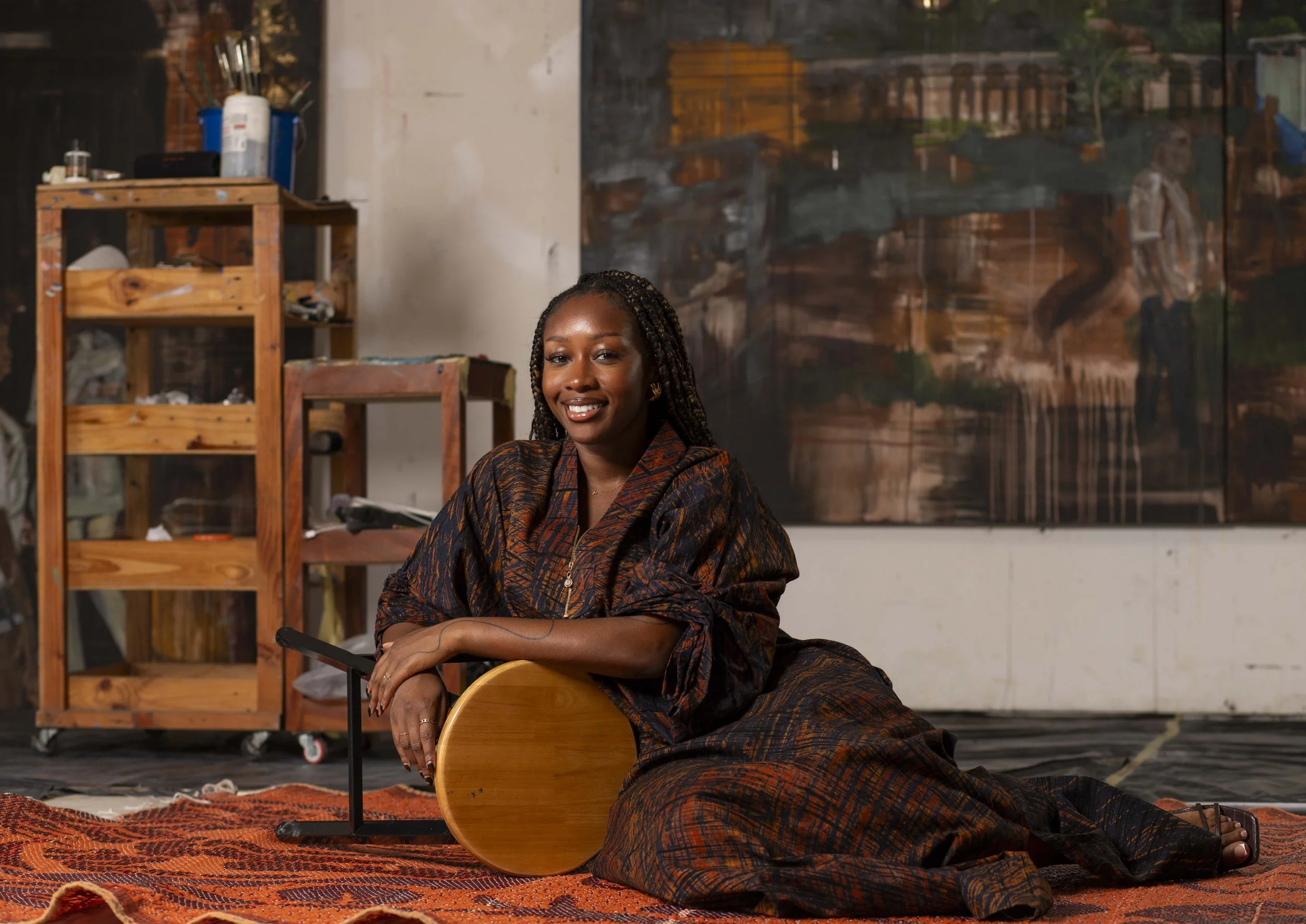
emma prempeh (b. 1996, london) is a british painter with ghanaian and vincentian heritage, living and working in london. working primarily in painting, her practice explores time, memory and lineage through a metaphysical lens — tracing how personal and ancestral histories shape belonging. her signature use of schlag metal, a brass alloy whose gradual oxidisation produces slow, live visual change, makes impermanence and transformation material conditions of the work itself. she holds a ba in fine art from goldsmiths university of london and an ma in painting from the royal college of art under the leverhulme trust arts scholarship. her work has been exhibited at gagosian new york, stephen friedman gallery, tiwani contemporary, perrotin paris, and the royal academy of arts, and is held in the ingram collection and the harris museum among others.
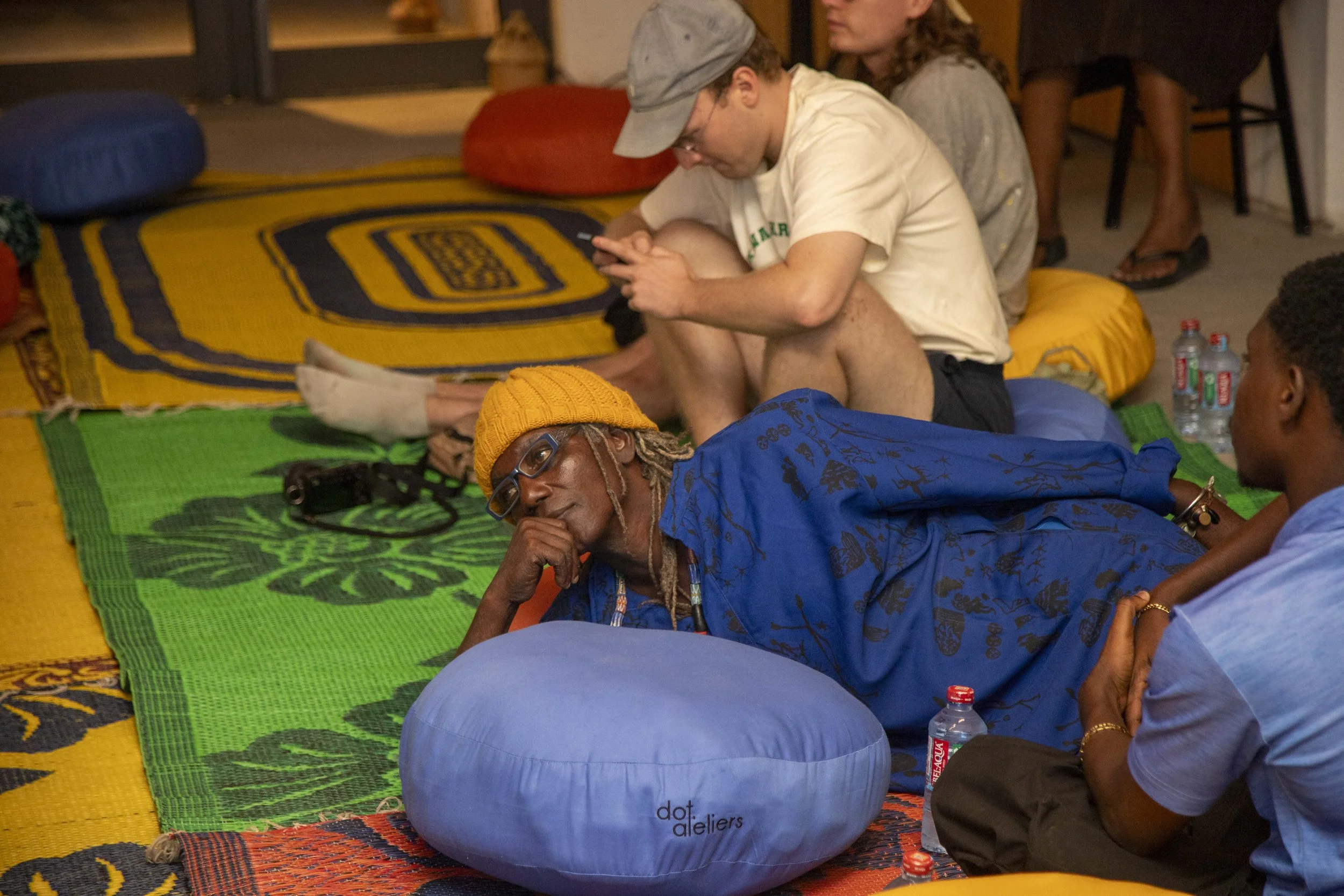
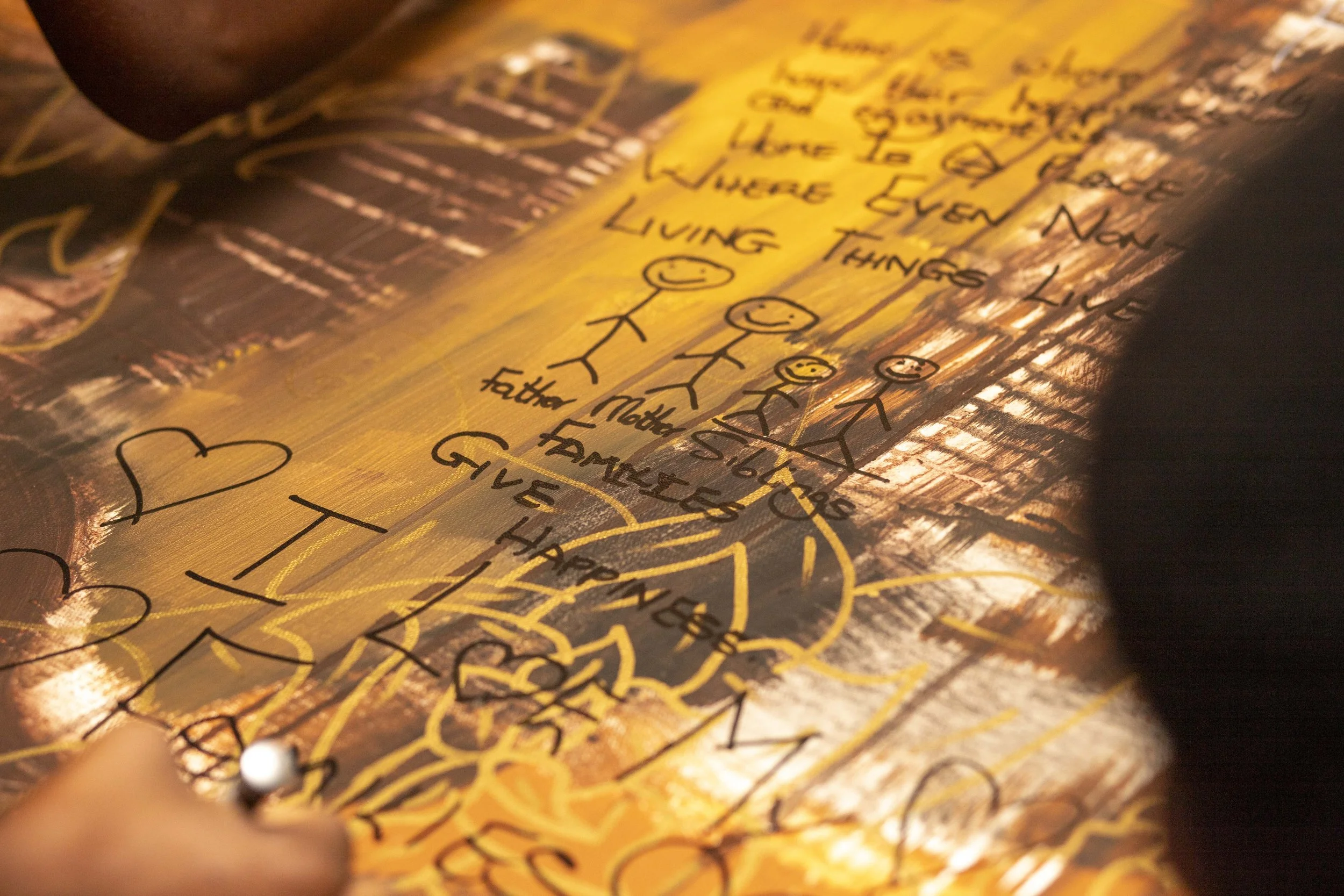
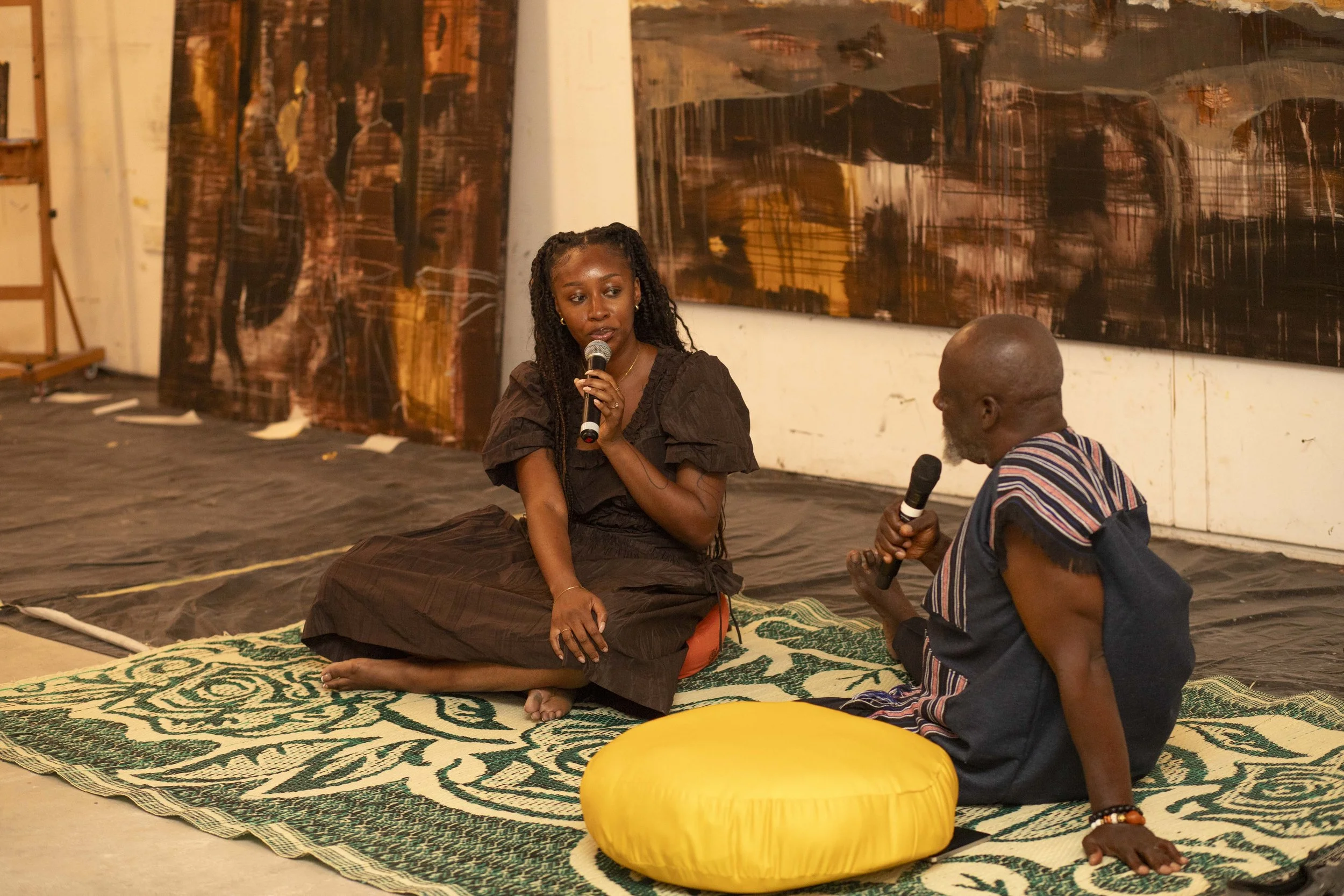
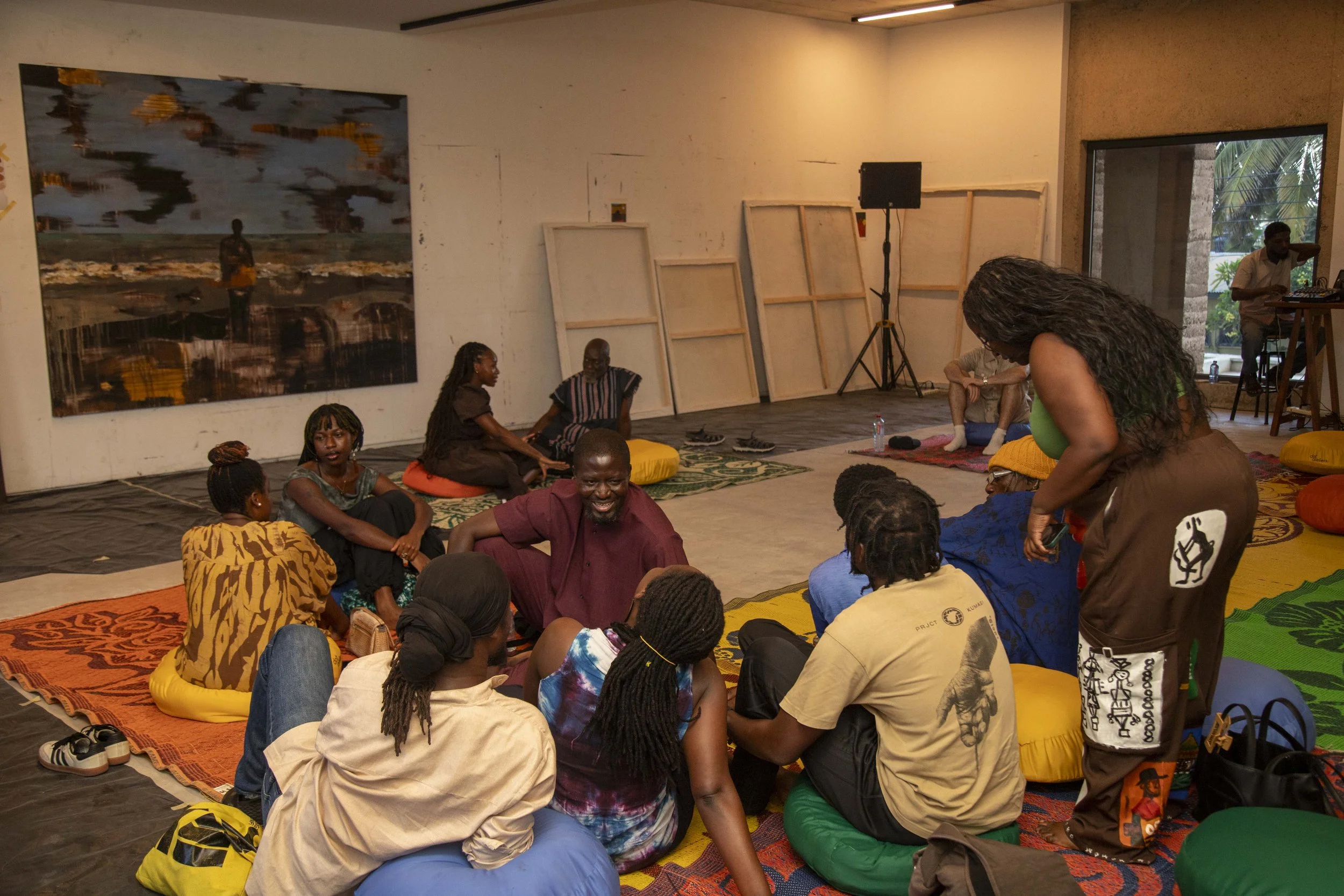
prempeh arrived at dot.ateliers carrying a deeply personal project: my father might see this, a body of work examining the spiritual connection between crystal palace park in london — where she grew up — and crystal palace school in obuasi, ghana, which her father founded and named after that same park. both sites hold traces of absence and fragility; the original crystal palace a monumental structure that no longer exists, her father's school a fragile echo of unfulfilled ambition. drawing on mark fisher's concept of hauntology, the project turns on a question prempeh has carried for years: am i haunted by my father's lost future, or is he haunted by mine? ghana offered not only physical proximity to that question but the spiritual grounding to face it. the residency became a space not just for making but for understanding — moving beyond the personal into a collective inquiry about unfulfilled legacies, diasporic longing, and what it means to return.
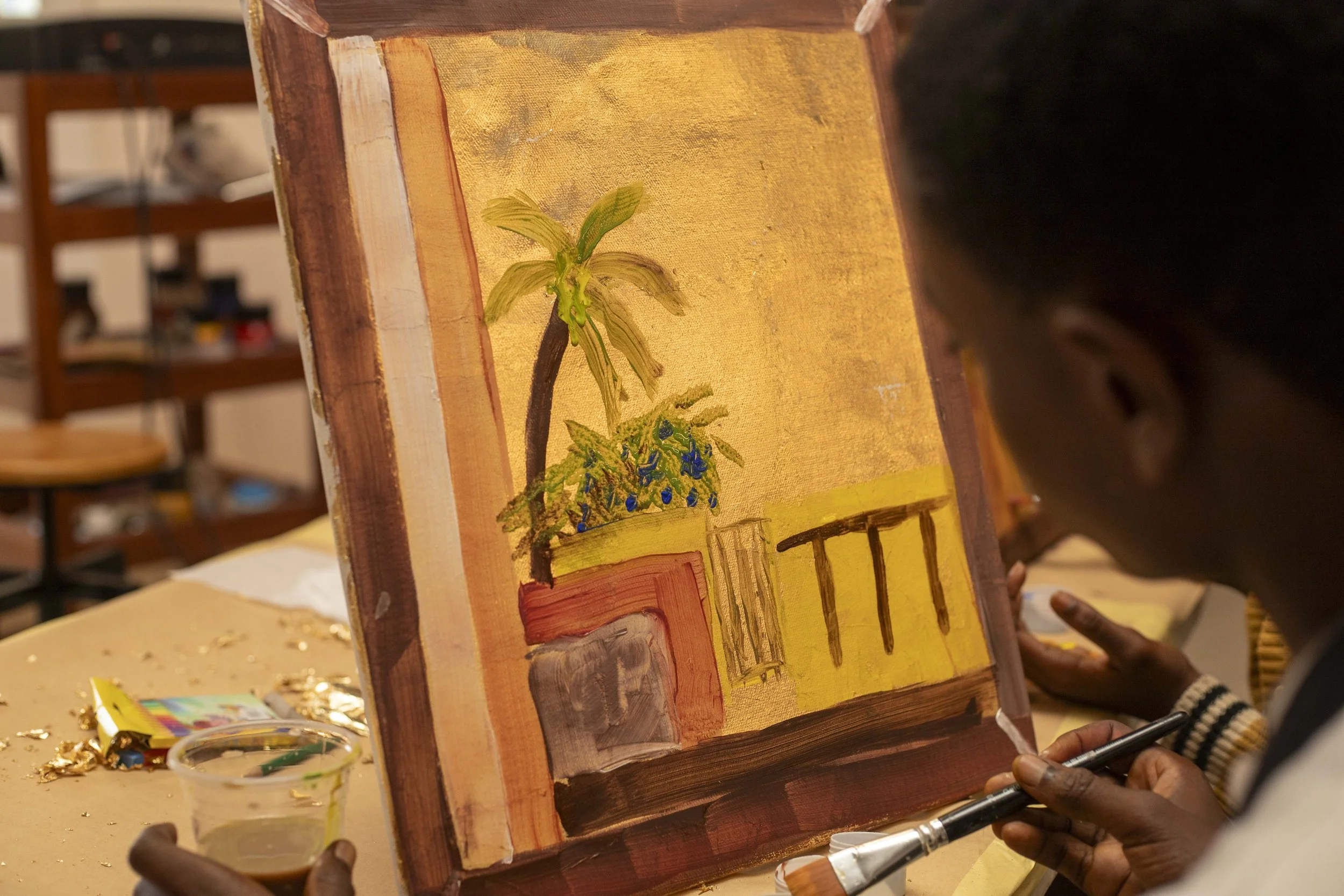
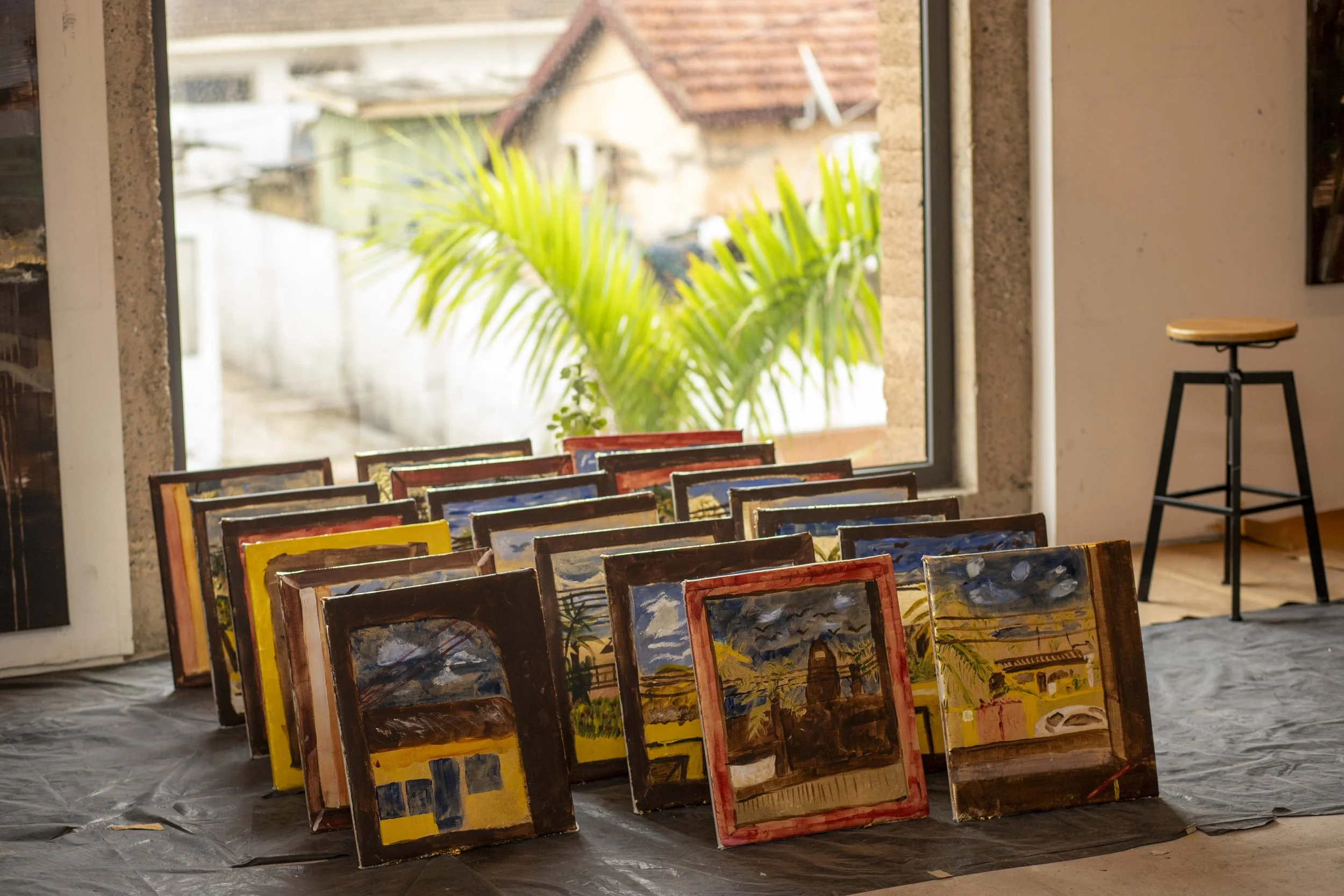
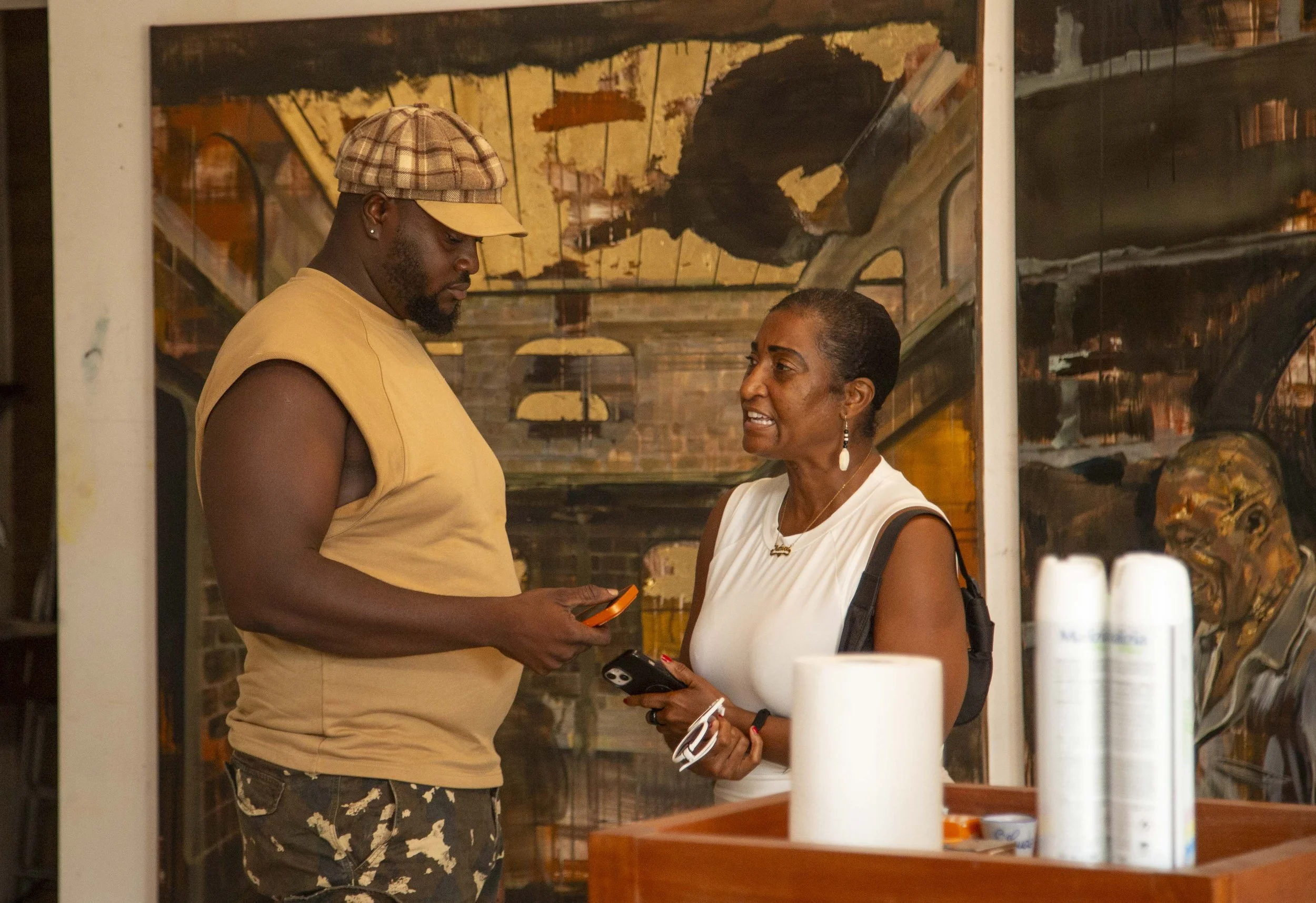
accra's landscape and the south labadi community became active presences in the work; the city's textures, colours, and rhythms pressing into the paintings and deepening their emotional register. situating the work within its original site closed the loop of the portal, allowing it to emerge in dialogue with the very space and community that shaped its story.